Applications of a Pet Food Extruder
- Dry pet food: Forming compatible kibble shapes.
- Pet treats: Producing suitable extruded treats.
- Product development: Testing recipes, textures, and shapes.
- Contract manufacturing: Producing approved pet food formulations.
- Specialized feed products: Processing other compatible formulations where the equipment permits.
Key Features and Benefits of a Pet Food Extruder
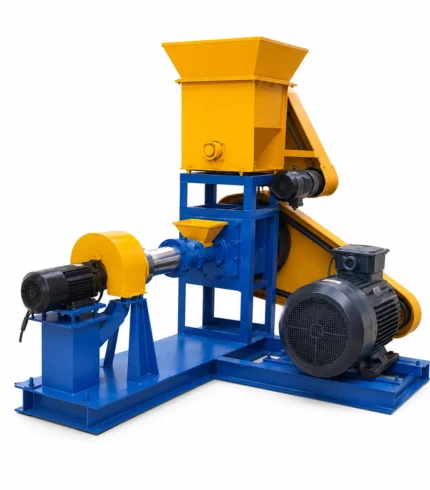
Single- or Twin-Screw Design
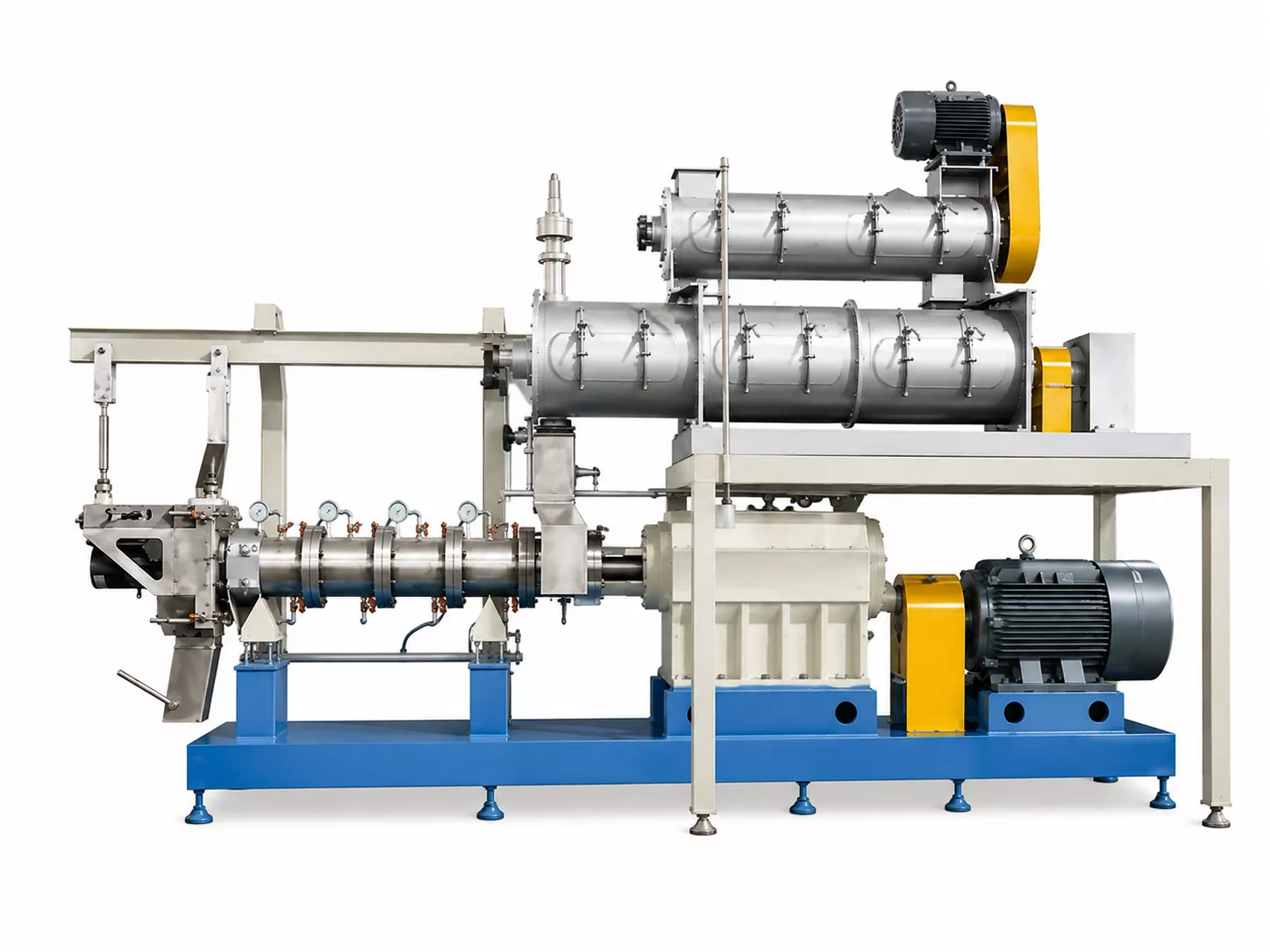
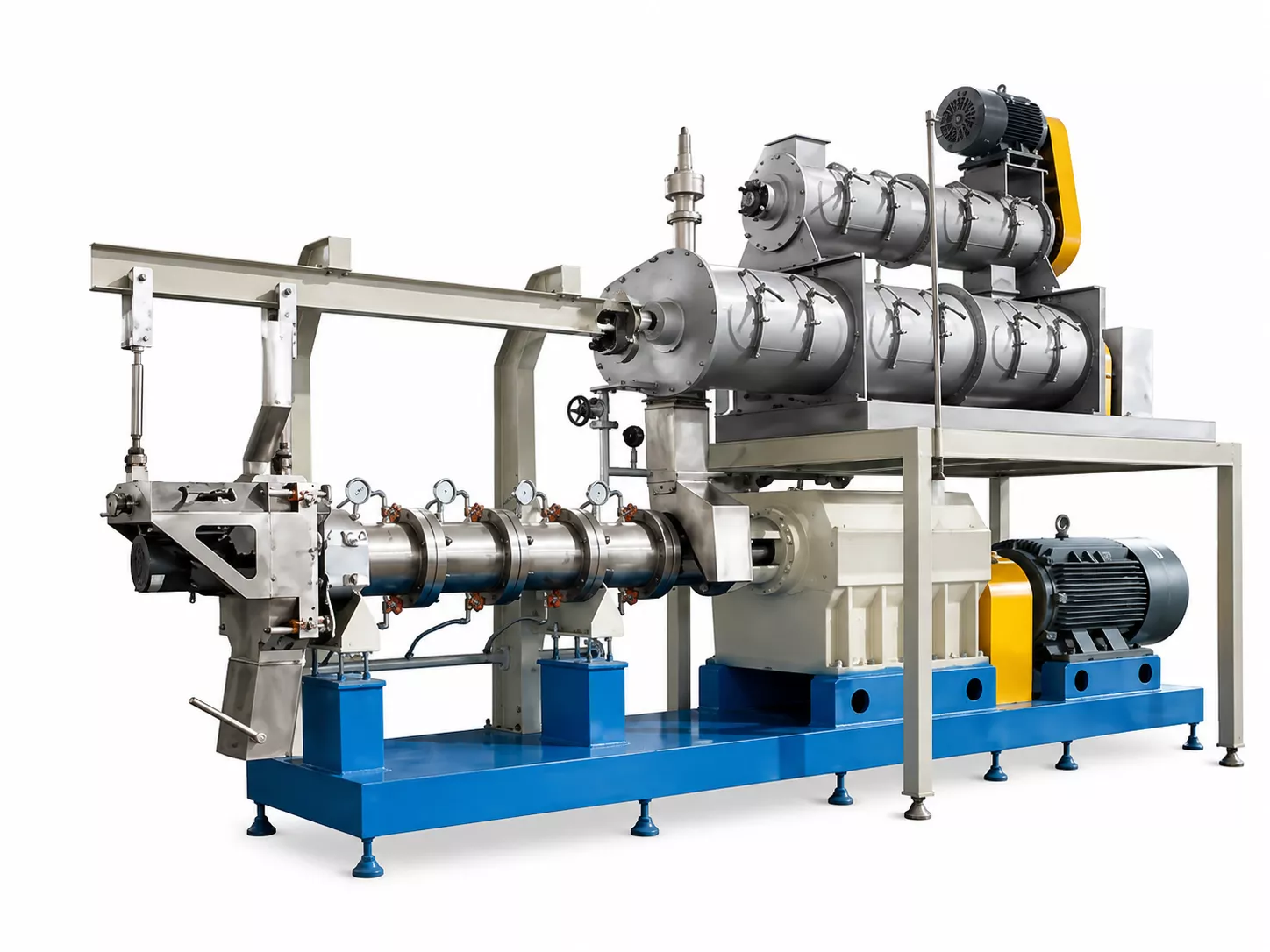
Extruders use one or two screws to move and process ingredients. The suitable configuration depends on the recipe and production requirements.
Interchangeable Dies
Compatible dies allow manufacturers to produce different shapes. Available options vary by machine.
Cutting System
A suitable cutter forms the extruded material into pieces. Cutting options depend on the product and equipment.
Process Controls
Some models allow operators to monitor or adjust selected operating conditions, such as temperature or screw speed.
Production-Line Integration
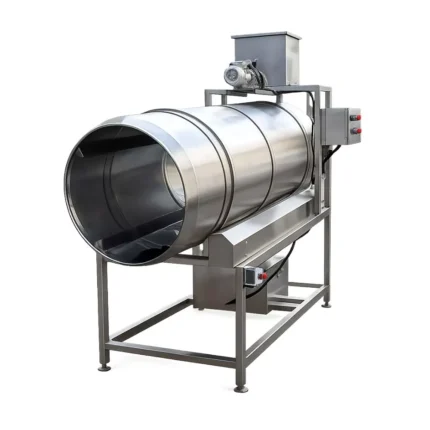
An extruder can be combined with compatible conditioning, drying, cooling, or coating equipment.
How Does a Pet Food Extruder Work?
A typical workflow includes:
- Prepare the ingredients: Weigh, grind, and mix the approved formulation as required.
- Condition the mixture: Add moisture or heat when specified by the process.
- Feed the extruder: Introduce the mixture into the machine.
- Process and shape: Screws move the material through the barrel and force it through a die.
- Cut and finish: Cut the product and complete any required drying, cooling, or coating.
- Inspect the batch: Check the finished product against established quality requirements.
Operators should follow equipment and ingredient suppliers’ safety instructions.
How to Choose a Pet Food Extruder
Define Your Product
Identify the recipe, shape, size, and desired finished-product characteristics.
Test the Formulation
Run representative trials to assess how the ingredients process and whether the result meets your requirements.
Review the Full Production Line
Determine which preparation, drying, cooling, coating, and packing equipment is needed.
Check Capacity and Utilities
Assess expected throughput, available space, and power, water, or steam requirements with the supplier.
Evaluate Safety and Support
Review guarding, cleaning access, wear parts, training, technical service, and applicable regulatory requirements.
Frequently Asked Questions
What is a pet food extruder used for?
It processes and shapes compatible ingredients for products such as kibble and certain pet treats.
Does an extruder make pet food nutritionally complete?
No. Nutritional adequacy depends on the formulation and product requirements, not the extruder alone.
Can one extruder process every recipe?
No. Suitability depends on the ingredients, machine design, and operating conditions. Test each intended formulation.
Is drying needed after extrusion?
Many extruded products require drying, but the process depends on the recipe and desired finished product.
How do I maintain a pet food extruder?
Follow the manufacturer’s instructions for cleaning, inspection, wear-part replacement, and servicing. Isolate the equipment before maintenance.

















Reviews
There are no reviews yet.