Applications of Vibrating Cooler
Snack Food Processing
The machine helps cool hot snacks such as chips, namkeen, extruded products and other suitable food items before seasoning or packaging.
Animal Feed Production
Feed manufacturers can use vibrating cooling equipment for suitable pellets and granules after processing.
Biomass Pellet Manufacturing
It supports cooling of hot biomass pellets before screening, storage and bagging.
Roasted Nuts and Seeds
The cooler can transport and cool roasted peanuts, seeds and other compatible products after heat treatment.
Grain and Granule Processing
It can be used for selected grains, granules and solid materials that require cooling during production.
Industrial Material Processing
Suitable vibrating cooler designs can handle compatible materials that need cooling and controlled conveying after heating or processing.
Key Features and Benefits of Vibrating Cooler
Vibrating Conveying Mechanism
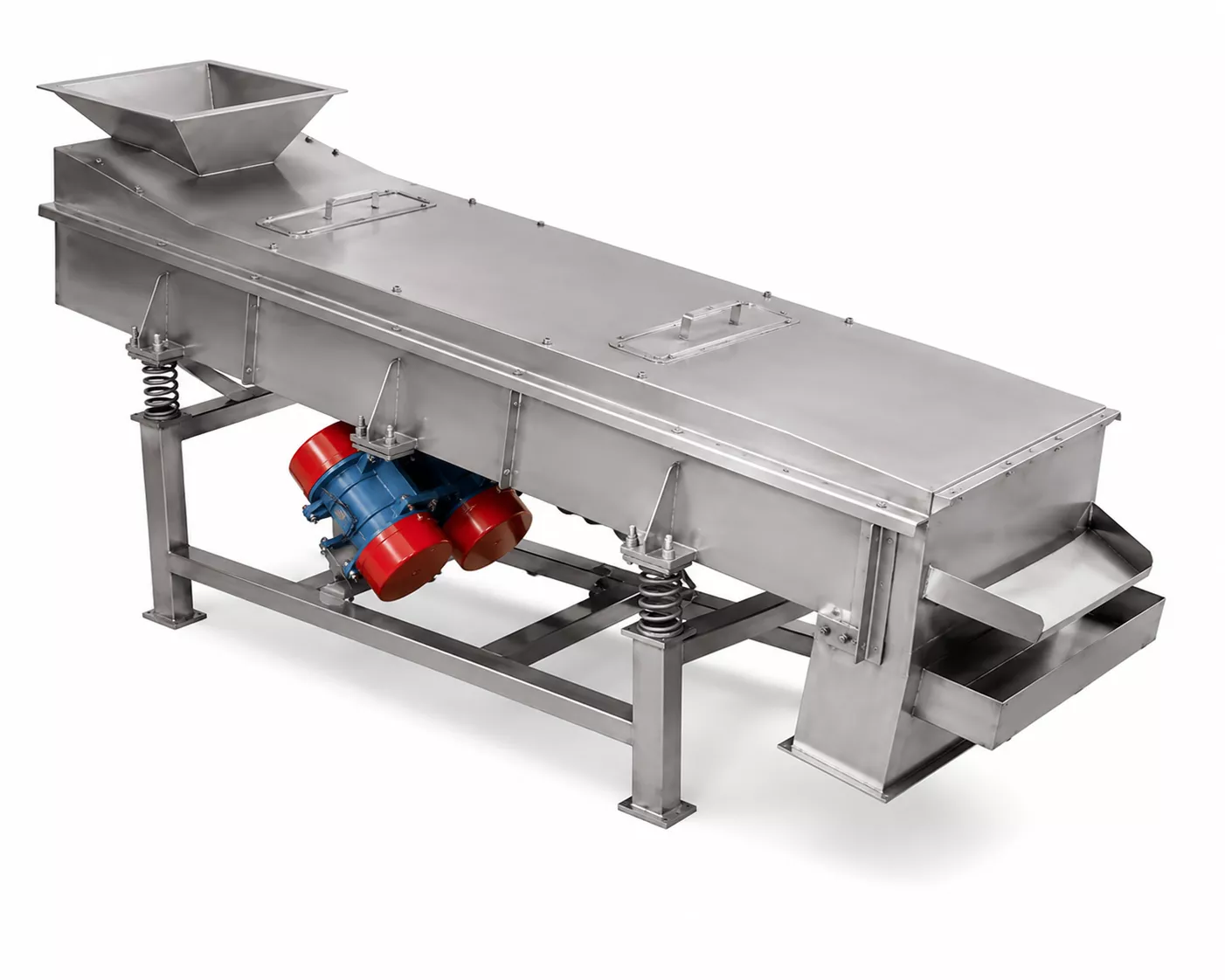
The vibrating deck moves products forward through controlled vibration, reducing the need for a separate conveying arrangement in some installations.
Integrated Cooling Process
The machine combines product movement and heat removal in one processing unit.
Airflow Arrangement
Natural or forced airflow helps remove heat from products as they travel across the vibrating surface.
Even Product Distribution
Vibration helps spread materials across the deck, allowing more product surface area to come into contact with cooling air.
Adjustable Product Movement
Depending on the model, vibration intensity and operating settings can be adjusted to suit different product characteristics.
Gentle Material Handling
A suitable vibration setting helps move products without unnecessary handling, making the equipment useful for selected fragile materials.
Production Line Integration
The cooler can connect with fryers, pellet mills, conveyors, screens and packaging equipment.
Convenient Maintenance
Accessible deck and drive components help operators carry out routine inspection and cleaning.
How Does a Vibrating Cooler Work?
First, hot products enter the vibrating cooler through the inlet from the previous processing machine. The material falls onto the vibrating deck or conveying surface.
Next, the vibration mechanism creates controlled movement. This moves the products gradually towards the discharge end while spreading them across the deck.
At the same time, air circulates around the products. In models with forced-air cooling, fans or blowers direct air through or across the material layer. The airflow absorbs heat and carries it away from the cooling area.
Once the products reach the required processing condition, they leave through the discharge outlet and move to the next production stage, such as seasoning, screening, storage or packaging.
How to Choose the Right Vibrating Cooler
Product Type
Select a machine according to the material you need to cool, such as snacks, feed pellets, biomass pellets or granules.
Processing Capacity
Match the cooler's capacity with the output of your fryer, pellet mill or other upstream equipment.
Cooling Method
Decide whether natural airflow or forced-air cooling is suitable for your product and required cooling time.
Vibrating Deck Design
Check the deck size, surface arrangement and product movement to ensure suitable handling and distribution.
Vibration Adjustment
Choose a model with suitable vibration control if your production involves products with different sizes, weights or handling requirements.
Cleaning and Maintenance
Review access to the deck, drive mechanism and airflow components to support regular cleaning and maintenance.
Frequently Asked Questions
1. What is a Vibrating Cooler used for?
A Vibrating Cooler is used to reduce the temperature of hot products while transporting them through a vibrating conveying system.
2. Which products can be processed in a Vibrating Cooler?
Depending on the design, it can handle snacks, animal feed pellets, biomass pellets, roasted nuts, seeds and other suitable granules.
3. How does a Vibrating Cooler provide cooling?
It moves products across a vibrating deck while natural or forced airflow removes heat from the material.
4. Does a Vibrating Cooler require a separate conveyor?
Not always. Its vibrating deck performs the conveying function during cooling, although additional conveyors may be needed to connect it with other machines.
5. Can a Vibrating Cooler be used after a pellet mill?
Yes. It can be installed after a pellet mill to cool suitable hot pellets before screening, storage or packaging.


















Reviews
There are no reviews yet.